Monoblock vs Stereo Amplifiers: Which Fits Your System
Last Updated: November 18, 2026
Quick Summary
Monoblock amplifiers use a separate chassis for each channel, which can improve separation and provide more power headroom, while stereo amplifiers share one chassis and cost less to set up. Neither format wins on every measure, so the best choice depends on your speakers, room, and budget.
- Monoblocks physically separate the left and right channels, each with its own power supply and signal path.
- The SX-1000R monoblock is stable down to 2 ohms and lists at $1,799.00 per unit.
- Dual-mono and monoblock are different: dual-mono shares one chassis and power cord.
- Trade-ins for original SX-1000 units can receive up to $1,500 toward an SX-1000R.
- Run a blind, level-matched comparison in your own system before deciding on sound.
Table of Contents
- Monoblock vs Stereo Amplifiers: The Core Difference
- How Channel Configuration Affects Sound: Separation, Imaging and Soundstage
- Benefits of Monoblock Amplifiers: Power, Headroom and Speaker Control
- Monoblock Amp vs 2 Channel Amplifier: Power Supplies, Bridged and Dual-Mono Designs
- Mono Amp for Subwoofer: When a Monoblock Makes Sense
- Cost, Placement and Cable Length: Practical Ownership Trade-Offs
- Choosing Your Amplifier: Start Your Next Step With Wyred 4 Sound
- Frequently Asked Questions
Choosing between monoblock and stereo amplifiers is one of the most consequential decisions in a home audio system, and the answer depends on your speakers, your room, and what you want from the music. This guide explains where monoblock amplifiers and stereo amplifiers differ, what those differences do and do not change in the sound, and how to decide which fits your system.
Monoblock amplifiers are not automatically the better choice. Neither format wins on every measure, and the supplied research does not include controlled tests proving that one always sounds better.
Monoblock vs Stereo Amplifiers: The Core Difference
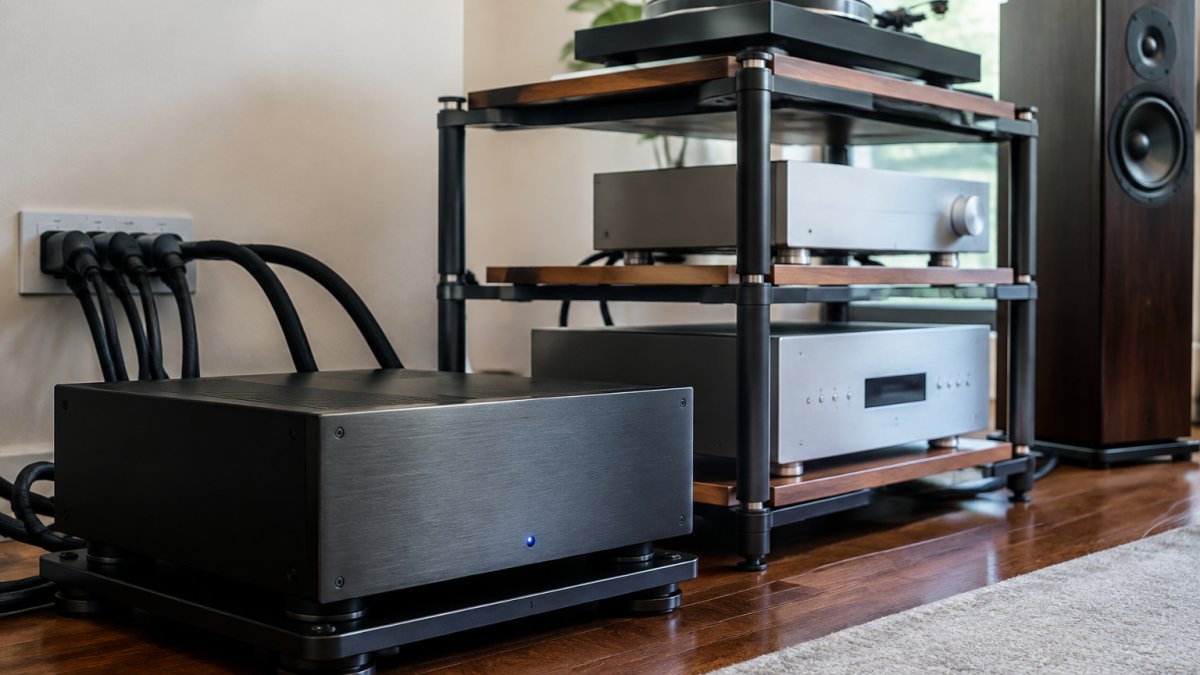
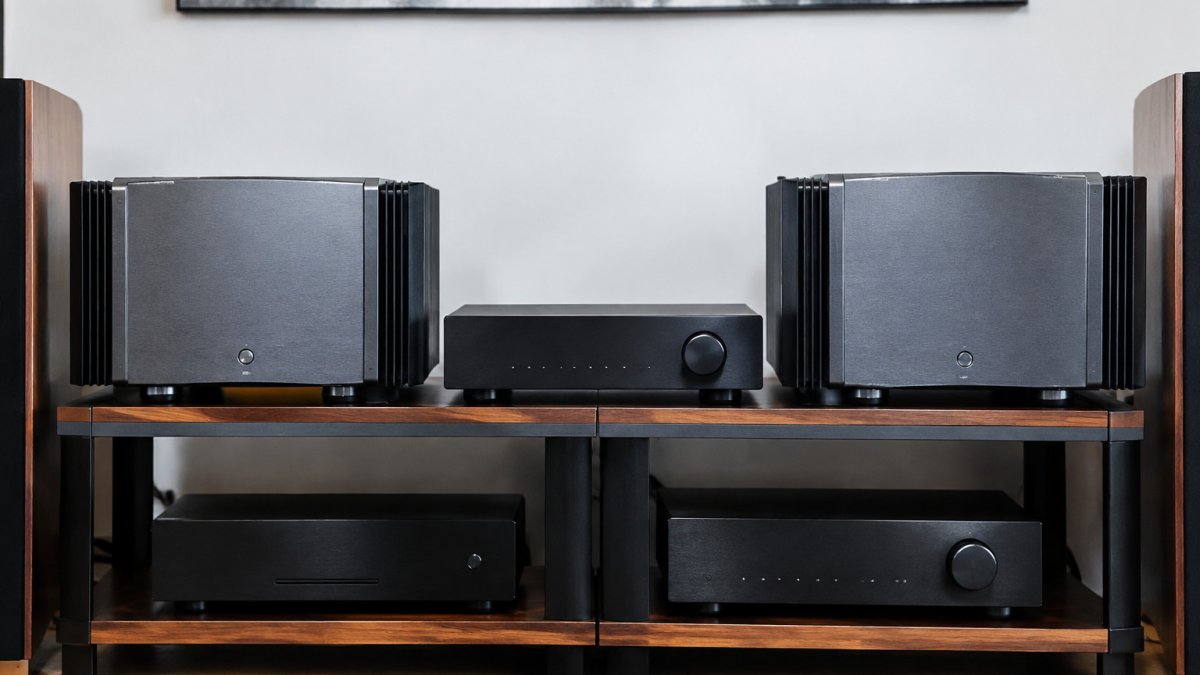
A monoblock amplifier is a single-channel amplifier. It handles one channel of audio, so a pair of them drives a left and a right speaker separately. A stereo amplifier packages both channels into one chassis, sharing a common power supply and transformer.
That physical difference drives everything else. With monoblocks, each channel gets its own chassis, its own power supply, and its own signal path. With a stereo amplifier, the two channels share circuitry. Whether that sharing matters in practice is the real question.
Format alone is not a quality guarantee.
How Channel Configuration Affects Sound: Separation, Imaging and Soundstage
Channel configuration shapes three things you can hear: how cleanly the left and right channels stay apart, how precisely instruments are placed in the stereo image, and how large the soundstage feels. Each is worth examining on its own, because marketing often blends them together, and because some of these effects are measurable while others depend on your room and your ears.
Channel Separation and Crosstalk in Practice
Crosstalk is the bleed of one channel's signal into the other, usually expressed in decibels (dB) relative to the driven channel. A stereo amplifier shares a chassis, a power supply, and often a circuit board between channels, so some coupling is unavoidable.
What separates a real advantage from a marketing claim is the measurement. Crosstalk figures for well-designed stereo amplifiers can be far below the threshold where listeners notice bleed, so the practical question is whether any measured difference falls inside or outside the range your system and room can reveal.
Monoblock, Dual-Mono, and Bridged: Three Different Things
These three configurations are often confused, and the confusion leads buyers to pay for isolation they may not be getting:
- Monoblock: Two separate chassis, each handling one channel, with independent power supplies and independent signal paths. This is the only configuration that physically separates the channels.
- Dual-mono: One chassis containing two fully separated channel circuits and, usually, two separate power transformers or windings. It imitates monoblock isolation inside a single enclosure and a single power cord. A stereo amplifier can be dual-mono in its circuitry without being two monoblock units.
- Bridged: A stereo amplifier configured to drive a single speaker at higher power by combining both channels. Bridging trades channel separation for raw power into one load, and it changes the load the amplifier sees, a bridged amp driving an 8-ohm speaker behaves like a 4-ohm load per channel, which matters for stability.
Know which design you are buying. A dual-mono stereo amplifier is not the same product as a pair of monoblocks, even when the marketing language sounds similar.
What Soundstage Gains Are Real and What Are Claims
Greater separation and a wider soundstage are commonly cited as monoblock benefits. These are plausible design claims rather than proven results: the size and consistency of any gain depend on the speakers, the room, and the recording.
A practical way to judge it is a controlled comparison in your own system: same speakers, same source, same level, switching only the amplifier. If the difference disappears when you match levels and blind the comparison, it was probably not the format. If it survives, you have found a real preference for your room.
Measured Performance vs. Listening Impressions
Separate the claims you can verify from the ones you cannot. Power output versus impedance, distortion, noise floor, and crosstalk are all measurable and comparable across designs. Soundstage width, image depth, and "air" are listening impressions that depend on the system and the listener. A balanced buying decision uses the measurements to narrow the field and your own listening to make the final call, not the other way around.
Benefits of Monoblock Amplifiers: Power, Headroom and Speaker Control
Monoblocks are most often chosen for power delivery. Each channel gets a dedicated power supply and output stage, which helps when a speaker is demanding or the music is dynamically complex. Headroom, the reserve of power above what the music normally needs, is the practical benefit most owners notice.
The SX-1000R from Wyred 4 Sound is a flagship monoblock. Its ultra robust power amp topology provides stability down to 2 ohms, which matters if your speakers drop to low impedance at certain frequencies. It accepts both XLR and RCA inputs and comes standard with WBT nextgen binding posts and Kimber TCX wiring.
Speaker control is the other frequently cited benefit. Because monoblocks sit closer to the speakers, they can use shorter speaker cables, which reduces cable losses and simplifies placement.
The article's key monoblock figures, drawn from its product examples, are summarised below.
| Product | Key figure | Note |
|---|---|---|
| SX-1000R monoblock | $1,799.00 | Per unit; pair is $3,598.00 before cables |
| SX-1000R stability | 2 ohms | Stable down to this impedance |
| SX-1000 Trade-in | $799.00 | Pre-owned, limited inventory |
| Trade-in credit | Up to $1,500 | Toward SX-1000R at retail price |
| mAMP monoblock | $729.00 | ICEpower-based, suited to subwoofers |
Monoblock Amp vs 2 Channel Amplifier: Power Supplies, Bridged and Dual-Mono Designs
Monoblock is not the only way to split a stereo amplifier's duties. Three designs are worth distinguishing:
- Monoblock: Two separate chassis, each handling one channel, with independent power supplies.
- Dual-mono: One chassis, but with two fully separated channel circuits and power supplies, designed to imitate monoblock isolation.
- Bridged: A stereo amplifier configured to drive a single speaker at higher power by combining both channels.
Dual-mono designs aim to provide much of the isolation of monoblocks within one enclosure and one power cord. Bridged operation trades channel separation for raw power into one load. Know which design you are buying, because marketing sometimes blurs these terms.
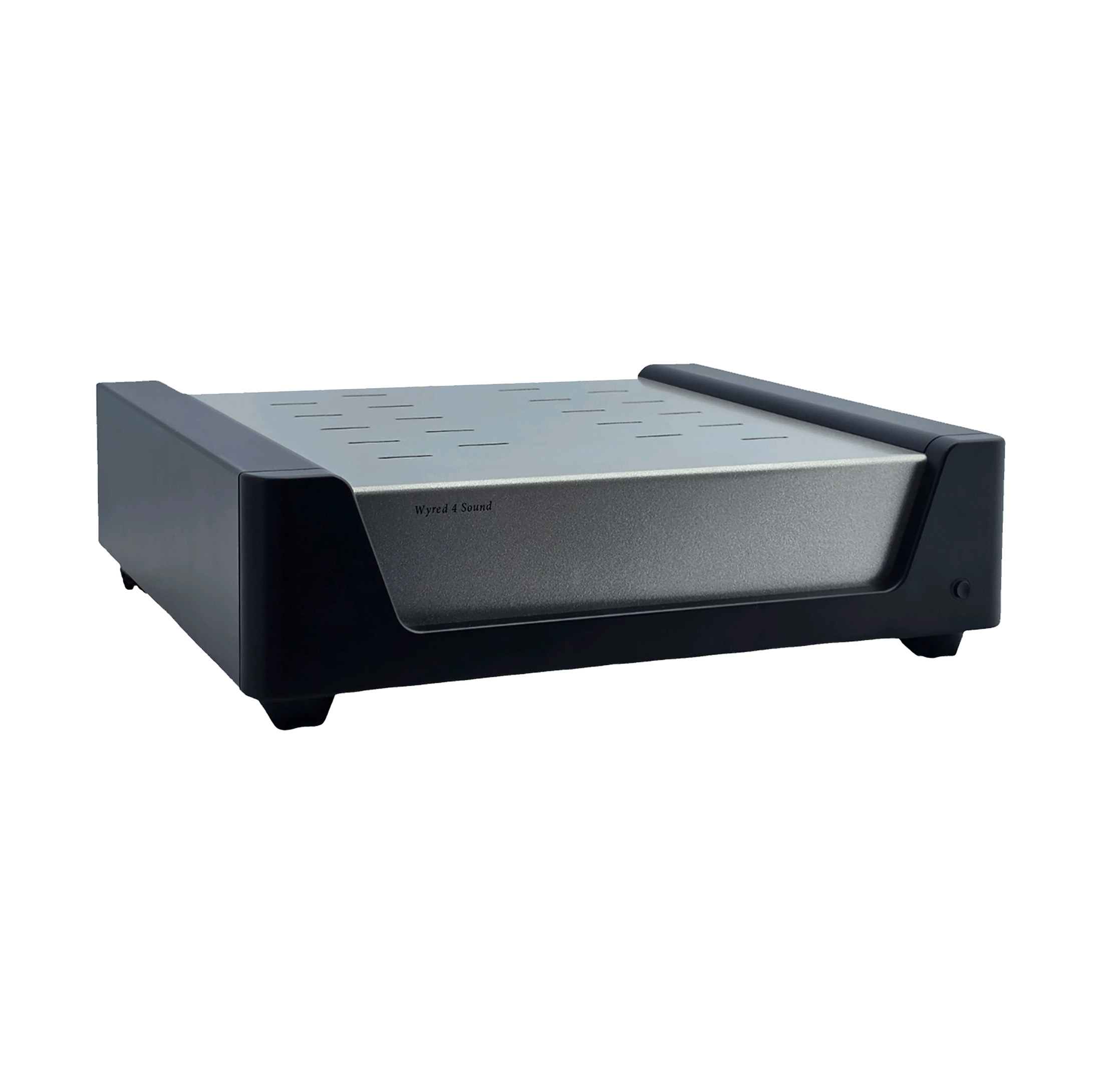
The ST mkIII Series is a stereo amplifier line built on ICEpower's ICEedge topology, available in three power levels, so you can match output to your speakers without moving to two chassis. Compare the ST mkIII Series stereo amplifiers.
Mono Amp for Subwoofer: When a Monoblock Makes Sense
A single-channel amplifier is a natural fit for a subwoofer, which reproduces only low frequencies from one channel. The mAMP is a monoblock built on ICEpower technology, priced at $729.00. Explore the compact mAMP monoblock built for subwoofer use.
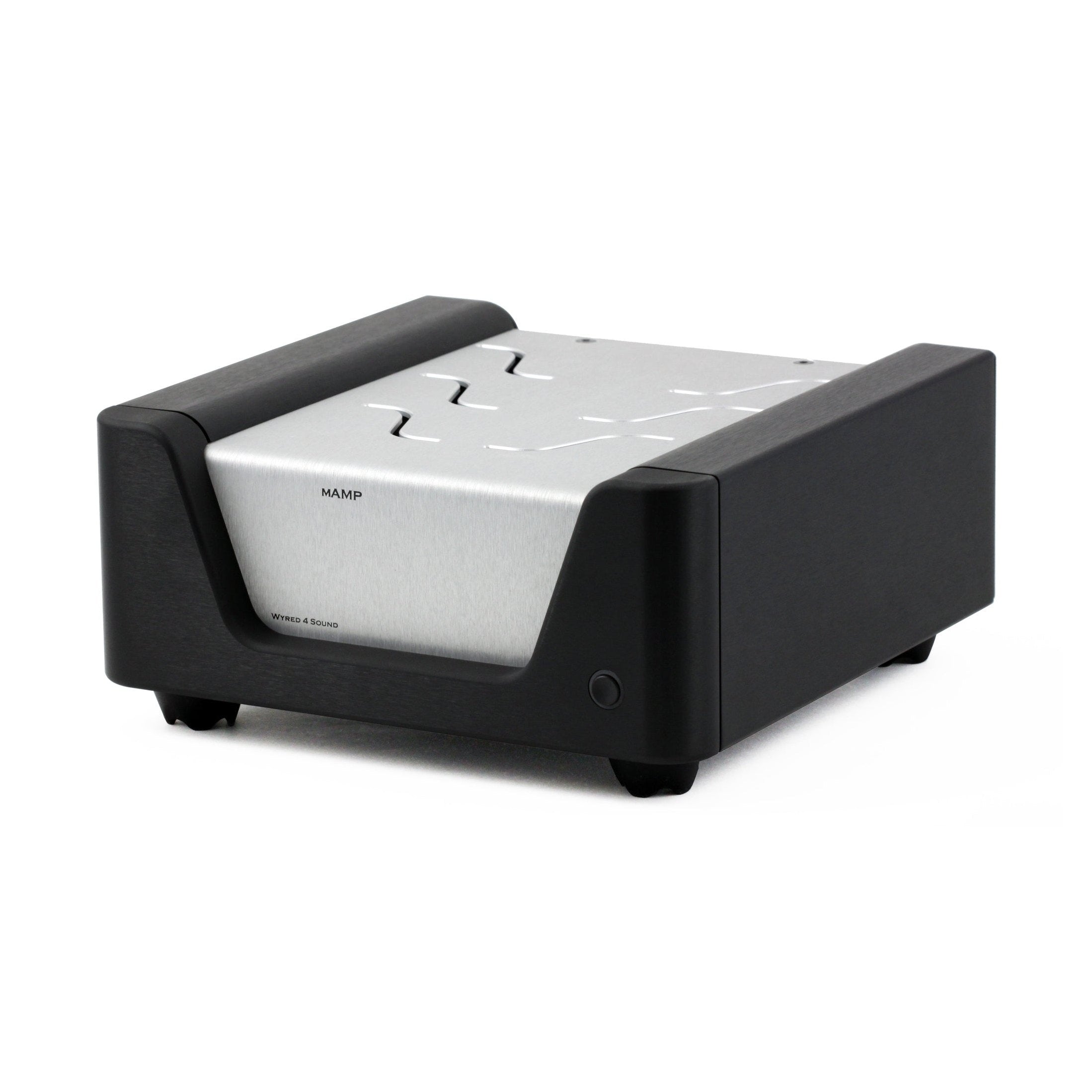
A monoblock is worth considering when you have a dedicated subwoofer or a bi-amplified setup. If you only need one channel of power for a specific job, a monoblock avoids paying for a second channel you do not use.
Cost, Placement and Cable Length: Practical Ownership Trade-Offs
Cost is where the decision becomes concrete, and the sticker price is only part of it.
If you already own original SX-1000 units, the trade-in program applies. Trade-ins can receive up to $1,500 toward the purchase of SX-1000R units at retail price, provided the units are in excellent cosmetic and operating condition. Original packaging is preferred.
The SX-1000 Trade-in listing, priced at $799.00, offers pre-owned units from the SX-1000 series. The listing notes these are thoroughly tested demo, reviewer, customer, or dealer units that may come slightly blemished, and that inventory is limited.
The Full Ownership Math
Add up the line items before you decide. Two monoblocks mean two power cords, two outlets, two runs of speaker cable (short, if the amps sit near the speakers), and either long interconnects from the preamp or a preamp placed between the speakers. A stereo amplifier means one power cord, one outlet, one pair of speaker cables (long, if the amp sits centrally), and short interconnects. The cable bill can favor either layout depending on your room, so price both configurations rather than assuming monoblocks are the expensive option overall.
Placement, Cable Length, and the Long-Run Trade-Off
Placement affects both performance and practicality. Monoblocks sit near each speaker, so you need space on both sides of the listening room and a plan for getting signal to each amp. A stereo amplifier keeps everything in one place but means longer speaker cables from a central location.
The trade-off is between long interconnects and long speaker cables. Long line-level interconnects carry a low-level signal and are more susceptible to noise pickup, especially unbalanced RCA runs; balanced XLR connections handle long runs better.
Compatibility and Safety Checks Before You Connect
Run through this checklist before powering anything up:
- Speaker impedance: Confirm the minimum impedance your speakers present and that the amplifier is rated for it. A monoblock rated for stability down to 2 ohms gives more margin with low-impedance speakers.
- Amplifier stability: Check the manufacturer's stated load limits. Bridged operation in particular changes the load the amplifier sees, so do not bridge an amp into a load it is not rated for.
- Gain matching: If you mix amplifier models or use monoblocks with a separate preamp, confirm the gain is compatible so the channels play at the same level.
- Balanced connections: Use XLR where the run is long or the system is prone to noise; confirm both the preamp and the amplifier support balanced input.
- Manufacturer limits: Follow the stated minimum impedance, power, and bridging limits. Exceeding them is the most common way to damage an amplifier or a speaker.
Check that any bridged configuration matches the amplifier's stated load limits against your speaker's minimum impedance before you connect.
Choosing Your Amplifier: Start Your Next Step With Wyred 4 Sound
To decide, start with three questions. Do your speakers demand high current or power? Do you have space for two chassis and a dedicated subwoofer? And is your budget better spent on one unit or a matched pair?
Next, match the format to your system rather than to a reputation. Compare the SX-1000R monoblock against the ST mkIII Series stereo amplifier using your speaker impedance, your room size, and your budget, then audition if you can.
Monoblock vs stereo amplifiers is a decision with real engineering on both sides. Read the full guide on how channel configuration shapes sound. Start with your speakers and your room, and the right format usually becomes clear.
Frequently Asked Questions
Should I use a mono or stereo amplifier?
A stereo amplifier suits most systems: one chassis drives both speakers, costs less, and takes less space. A monoblock pair makes sense when you want each channel isolated, when your speakers demand more current, or when you plan to place amplifiers close to each speaker to shorten cable runs. The Wyred 4 Sound SX-1000R, at $1,799.00 per monoblock, and the mAMP, at $729.00, show how monoblock designs are priced. Match the choice to your speakers, room and budget.
Are monoblock amplifiers better?
Monoblocks are not automatically better. Their advantages are channel isolation, dedicated power supplies per channel, and shorter speaker cable runs. Whether those advantages are audible depends on your speakers, your listening room and your priorities. Compare the two formats in your own system where possible, rather than relying on general claims about separation or soundstage.
What is a monoblock amp used for?
A monoblock amplifier powers a single channel. People use them in pairs to drive a left and right speaker, or to drive a single subwoofer or a bridged load. Wyred 4 Sound's monoblock models include the SX-1000R and the mAMP.
Is a monoblock amp better for a subwoofer?
A monoblock is a practical fit for a subwoofer because it delivers one channel of power to one driver without sharing a power supply. This suits a dedicated low-frequency channel. Check the amplifier's input and impedance specifications against your subwoofer before buying.