
Best Music Server Software for Audiophiles (2026)
Table of Contents
- Quick Comparison: Top Music Server Software Options
- Best Music Server Software for Audiophiles: Dedicated Hardware Platforms
- Best Audiophile Music Player Software for Windows
- Aurender vs Innuos Music Server Comparison: What Actually Differs
- How Music Server Software Affects Sound Quality
- Digital Audio Optimization Tips for Your Server Setup
- Which Music Server Software Should You Choose?
- Frequently Asked Questions
Last Updated: September 1, 2026
Choosing the best music server software for audiophiles is one of the most consequential decisions in building a high-fidelity system. Most listeners obsess over DACs and amplifiers, then run their entire music library through a general-purpose computer with a stock operating system. The gap between a purpose-built music server and a generic PC is substantial. Below, we'll cover the top dedicated hardware platforms, the best software options for Windows, what separates competing server ecosystems, and how to optimize your digital signal path for maximum audio fidelity.
Quick Picks:
- Best Overall: Wyred 4 Sound MS ($2,999), reference-level server performance with full Roon Core integration
- Best Entry Point: Wyred 4 Sound MS Essential ($1,999), audiophile-grade performance without the reference price
- Best Plug-and-Play Roon Core: Roon Nucleus ($1,898), fanless, purpose-built, minimal setup
Quick Comparison: Top Music Server Software Options
The right music server software depends on your library size, streaming habits, and how much control you want over DSP and signal path processing.

| Platform | Price | Best For | Bit-Perfect | DSD/PCM | Roon Core |
|---|---|---|---|---|---|
| Wyred 4 Sound MS | $2,999 | Reference performance | Yes | Up to 32/384kHz + DSD | Full |
| Wyred 4 Sound MS Essential | $1,999 | Entry audiophile | Yes | Up to 32/384kHz + DSD | Full |
| Roon Nucleus | $1,898 | Plug-and-play Roon | Yes | DSD + PCM | Full |
| Roon (software only) | Subscription | Windows/Mac users | Yes | DSD + PCM upsampling | Core only |
| JRiver Media Center | One-time license | Windows power users | Yes | DSD + PCM | No |
| foobar2000 + WASAPI | Free | Budget audiophiles | Yes | Limited | No |
Dedicated hardware platforms handle library management, metadata retrieval, and audio engine processing without competing with background OS tasks. Full Roon Core integration enables multi-room streaming, gapless playback, and remote control consistency that software-only installations can't match.

Best Music Server Software for Audiophiles: Dedicated Hardware Platforms
Dedicated hardware is the cleanest path to bit-perfect playback. A purpose-built server runs a stripped-down audio OS, eliminates unnecessary background processes, and places the digital-to-analog converter at the center of a controlled signal path.
Roon Nucleus ($1,898): The Plug-and-Play Roon Core
The Roon Nucleus is the simplest way to get a dedicated Roon Core into your system. Plug it into your network, connect a USB hard drive or point it at a NAS, install the Roon remote app on any device, and you're playing music within minutes. Roon OS is a lightweight operating system built exclusively for music playback with no browser, email client, or background updater competing for resources.
What you get with Roon on Nucleus:
- Bit-perfect playback with full signal path display
- DSD and PCM upsampling with configurable audio engine settings
- Streaming integration (Tidal and Qobuz) alongside local library management
- Multi-room streaming to any Roon Ready, AirPlay, Sonos, or Squeezebox endpoint
- Gapless playback across formats
The fanless design means it can sit on your hi-fi rack without introducing acoustic noise. Roon requires either an annual or lifetime membership on top of the hardware cost.
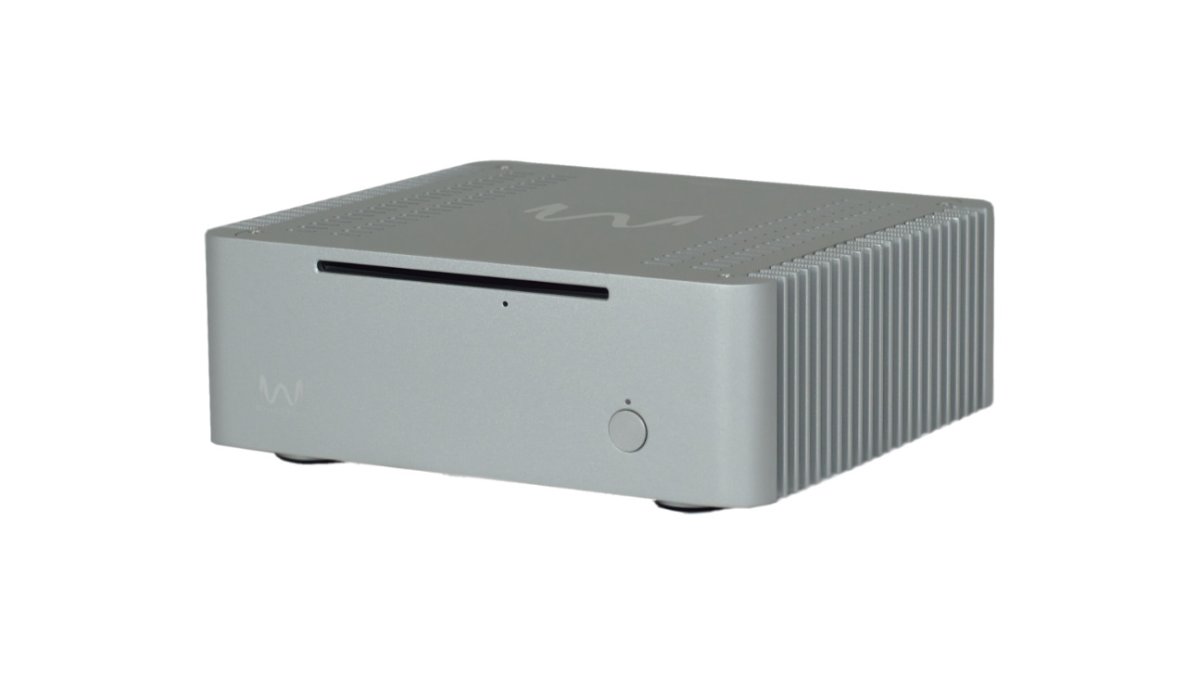
Wyred 4 Sound MS Essential ($1,999): Audiophile-Grade Entry Point
The MS Essential ships with a 240GB SSD internal drive, supports resolutions up to 32/384kHz and DSD through a connected USB DAC, and runs as a full Roon Core Server. The MS Essential runs software designed exclusively for high-quality digital audio playback. Setup is straightforward: the server supports drag-and-drop music transfer from a computer or NAS drive, plays internet radio, and handles library management without requiring technical configuration.
Wyred 4 Sound MS ($2,999): Reference-Level Server Performance
The MS delivers the same resolution ceiling, 32/384kHz and DSD, but with higher-powered internal components and optional i7 Performance Package with solid-state hard drive for better read performance and lower latency during library access.
Reference-quality digital outputs include USB, S/PDIF, and I²S. The I²S output is particularly significant: it keeps clock and data signals on separate lines, which directly reduces jitter at the point where the signal enters your DAC. The MS also handles CD ripping automatically.
Best Audiophile Music Player Software for Windows
Not every audiophile is ready to invest in dedicated hardware. For Windows users, several software platforms deliver genuine audiophile-grade performance. Windows routes audio through its own mixer by default, which resamples and processes the signal before it reaches your DAC (microsoft.com). Bypassing this requires either WASAPI exclusive mode or ASIO drivers, both of which give the audio application direct hardware access and enable bit-perfect output.
Roon (software install): The most complete music server software available for Windows, functioning as a Roon Core with library management, metadata, streaming integration, DSP, and multi-room audio.
JRiver Media Center: The most configurable Windows audio player for power users. JRiver supports WASAPI, ASIO, and kernel streaming, handles DSD natively, and includes a DSP engine with parametric EQ, convolution filters, and room correction.
foobar2000 with WASAPI/ASIO output: The free option that audiophiles have trusted for years. foobar2000 is minimal by design, but the plugin ecosystem adds WASAPI exclusive mode, ASIO output, DSD playback, and gapless support.
Audirvana: A macOS-first player now available on Windows, Audirvana emphasizes a clean signal path and direct hardware access with UPnP/OpenHome integration for streaming from a NAS.
If you're running music server software on Windows long-term, the performance ceiling is lower than dedicated hardware. A Wyred 4 Sound MS or MS Essential will outperform any general-purpose Windows machine at the same price point.

Aurender vs Innuos Music Server Comparison: What Actually Differs
Both are well-regarded dedicated music server platforms. The real differences come down to software ecosystem, streaming integration, and how each handles the audio engine.
Software ecosystem: Some dedicated server platforms lock you into a proprietary app for library management and remote control. Others support Roon as a Core or endpoint. The Roon ecosystem offers broader device compatibility, richer metadata, and a more mature multi-room streaming architecture.
Streaming protocol and library management: The quality of metadata handling varies significantly between platforms. A server that automatically enriches your library with album art, credits, and related artist information reduces friction and improves the browsing experience. digitizing vinyl records.
Audio engine and signal path: Measurable differences between servers often come down to USB output quality, clock accuracy, and noise isolation rather than software processing. The Wyred 4 Sound advantage: the MS and MS Essential run software designed exclusively for digital audio. The I²S output option eliminates the clock recovery overhead that competing S/PDIF implementations introduce.
| Factor | What to Look For |
|---|---|
| Software ecosystem | Full Roon Core vs. proprietary app |
| Streaming integration | Tidal, Qobuz, internet radio support |
| Output interfaces | I²S, USB, S/PDIF, prioritize I²S |
| Library management | Metadata depth, NAS support, drag-and-drop |
| OS architecture | Purpose-built audio OS vs. adapted workstation OS |
| Support and longevity | Firmware update track record, manufacturer support |
How Music Server Software Affects Sound Quality
Most people assume the server is just a transport. This is the part most guides get wrong.
Bit-Perfect Playback and the Audio Engine
Bit-perfect playback is the transmission of audio data to a DAC without any modification, no resampling, no volume normalization, no DSP processing unless explicitly enabled. Achieving it requires bypassing the OS audio mixer entirely, which is why WASAPI exclusive mode and dedicated audio operating systems matter.
The audio engine in your music server software determines what happens to the PCM or DSD data before it reaches the digital-to-analog converter. Roon's audio engine adds DSP capabilities, parametric EQ, convolution-based room correction, and configurable upsampling that can be applied selectively per output zone.
Power Supply, Noise Floor, and Jitter
Every digital component generates electrical noise. A server's switching power supply, processor, and storage drive all introduce high-frequency interference that couples into the audio signal path. Dedicated audio servers address this through fanless designs that eliminate motor noise, linear power supplies or carefully regulated switching supplies that reduce noise at the power rail level, and physical isolation between the digital processing section and the audio output stage.
Jitter, timing errors in the digital clock signal, introduces phase noise that the DAC interprets as harmonic distortion (peer-reviewed research). The I²S interface standard separates clock and data lines, which is why it's the preferred connection between a music server and a DAC (ieee.org). S/PDIF embeds clock information within the data stream, requiring the DAC to recover the clock, a process that introduces measurable jitter.
Digital Audio Optimization Tips for Your Server Setup
Getting the hardware right is half the equation. The other half is network topology, storage configuration, and software settings.
NAS Setup, Network Topology, and Latency
A network-attached storage device is the most practical way to maintain a large local music library accessible to multiple endpoints. Wired over wireless, always. Wi-Fi introduces variable latency and packet loss that can cause buffer underruns during high-resolution playback. A gigabit Ethernet connection between your NAS, music server, and router is the baseline. For DSD128 and above, a wired connection is non-negotiable.
Network topology for multi-room streaming: Place your Roon Core on the same network switch as your primary DAC endpoint to minimize network hops. Buffer management: Most audiophile music server software allows you to configure the playback buffer size. Larger buffers reduce the risk of dropouts during network congestion but increase latency. For local library playback, a moderate buffer size works well.
NAS drive selection: For audio use, choose NAS drives with low vibration profiles. Many audiophiles use SSDs in their NAS units to minimize mechanical noise and vibration that can couple through a shared rack into sensitive components.
Open Source vs. Proprietary Software: Security and Longevity
Open source platforms offer transparency and community-driven security but often require significant technical investment to configure correctly. Proprietary platforms offer a controlled, tested environment with professional support. For long-term investment protection, the relevant question is firmware update frequency and the manufacturer's track record. Wyred 4 Sound's server lineup has received ongoing firmware support. For most audiophiles, a well-supported proprietary platform is the lower-risk choice.
Which Music Server Software Should You Choose?
The right choice depends on your library size, your existing hardware ecosystem, and how much you value setup simplicity versus configurability.
Choose the Wyred 4 Sound MS ($2,999) if you want reference-level performance, I²S output for direct DAC connection, and a server whose entire processing architecture is optimized for audio.
Choose the Wyred 4 Sound MS Essential ($1,999) if you want audiophile-grade server performance without the reference price. The 240GB SSD, full Roon Core support, and resolution ceiling of 32/384kHz plus DSD cover every practical use case for most listeners.
Choose the Roon Nucleus ($1,898) if you're committed to the Roon ecosystem and want a plug-and-play hardware Core. The fanless design, fast boot time, and direct compatibility with Wyred 4 Sound USB DACs make it a natural pairing. Remember to budget for the Roon membership.
Choose Windows software (Roon, JRiver, or foobar2000) if you already have a capable PC and want to test the performance ceiling before investing in dedicated hardware. Understand that OS-level interference is real, and the gap between a general-purpose computer and a dedicated server is audible on a resolving system.
The music server is the first link in the digital signal chain. Investing in a high-end DAC while running a compromised server is like putting premium fuel in an engine with a clogged air filter. The server sets the ceiling for everything downstream.
Building a high-fidelity digital audio system means getting every link in the signal chain right, and the music server is where that chain begins. Wyred 4 Sound designs servers, DACs, and precision power solutions specifically for listeners who refuse to compromise on audio fidelity. The MS and MS Essential pair directly with our DAC lineup via I²S for a lower-jitter signal path than most competing configurations can achieve. Subscribe to the Wyred 4 Sound newsletter for engineering updates, system-building guides, and exclusive offers on our award-winning components.
Frequently Asked Questions
Does music server software actually affect sound quality?
Yes, in measurable ways. Music server software controls how audio data moves through the signal path before it reaches your digital-to-analog converter. Software that enforces bit-perfect playback avoids sample-rate conversion or OS-level mixing that degrades fidelity. Latency and buffer management also matter: poorly tuned buffers introduce jitter, which smears transient detail. A dedicated audio engine, like the one in Roon OS, bypasses the general-purpose processing layers that standard operating systems add, keeping the signal path cleaner from library to DAC output.
What is the best music server software for audiophiles?
Roon is the most widely recommended music server software for audiophiles because it combines thorough library management, metadata enrichment, bit-perfect playback, DSD and PCM upsampling, and multi-room streaming in one platform. Running it on dedicated hardware, such as the Roon Nucleus or a Wyred 4 Sound MS server, removes the noise and processing overhead of a general-purpose PC. For Windows-based setups, standalone audio player software with WASAPI or ASIO output can also deliver audiophile-grade results at lower cost.
Is there something like Jellyfin specifically for music?
Jellyfin handles music libraries but was built primarily around video. Purpose-built open-source alternatives include Navidrome and Ampache, which focus on music metadata, lossless streaming, and FLAC library management. For audiophile-grade playback with features like gapless playback, DSP, and bit-perfect output, Roon remains the leading option, though it requires a paid subscription. Open-source solutions trade some polish for flexibility and avoid recurring fees, which matters for listeners concerned about long-term software support and security.
What should I look for when comparing dedicated music server hardware?
Prioritize processor headroom for DSP and upsampling tasks, fanless design to eliminate mechanical noise near the signal path, and a purpose-built operating system that devotes all resources to audio playback. Storage flexibility matters too: look for NAS compatibility, internal SSD options, and USB drive support. Output quality depends on the digital outputs available, such as USB, S/PDIF, or I²S, and how well the server's power supply isolates noise from the audio circuit. Streaming service integration and remote control app compatibility round out the evaluation.
How do Aurender and Innuos music servers compare to Wyred 4 Sound options?
Aurender and Innuos both offer proprietary software ecosystems with polished interfaces and strong streaming service integration. The key difference from Wyred 4 Sound's MS and MS Essential servers is the software platform: Wyred 4 Sound servers run full Roon Core, giving access to Roon's metadata engine, multi-room streaming, and extensive DSP tools. Wyred 4 Sound also applies hardware-level optimization, including audiophile-grade internal components, that other providers at similar price points do not always match. The MS starts at $2,999 and the MS Essential at $1,999.