How to Prevent Audio Component Obsolescence
Table of Contents
- What Audio Component Obsolescence Actually Means
- Future-Proofing Home Audio Systems: A Proactive Framework
- Audio Equipment EOL Management: Tracking End-of-Life Risks
- Modular Audio Component Design and Upgradability
- Software-Defined Audio and Firmware Support as a Longevity Strategy
- Redesign vs. Stockpiling: A Cost-Benefit Analysis for Audiophiles
- Sustainable Repairability, Right-to-Repair, and Open-Source Alternatives
- How to Prevent Audio Component Obsolescence: A Step-by-Step Summary
- Frequently Asked Questions
Last Updated: August 31, 2026
What Audio Component Obsolescence Actually Means
Audio component obsolescence is the process by which electronic parts, integrated circuits, or complete audio devices become unavailable, unsupported, or incompatible with current systems, making them difficult or impossible to repair or replace. For audiophiles investing in high-fidelity gear, this is the single biggest threat to long-term system value.
The problem cuts two ways. First, manufacturers discontinue specific electronic components, capacitors, DAC chips, clock oscillators, output transformers, when production volumes no longer justify tooling costs. Second, the software layer compounds the hardware problem: firmware updates stop, driver support ends, and a perfectly functional DAC becomes incompatible with the next generation of music servers or streaming protocols. The goal is not to freeze a system in amber, but to build, buy, and maintain audio equipment so that obsolescence becomes a manageable event rather than a crisis.
Future-Proofing Home Audio Systems: A Proactive Framework
Most guides on future-proofing home audio systems focus on buying the "latest" technology. That is exactly backwards. The question is not what is newest, but what will still be serviceable in a decade.
Step 1: Select Long-Lifecycle Components at the Design Stage
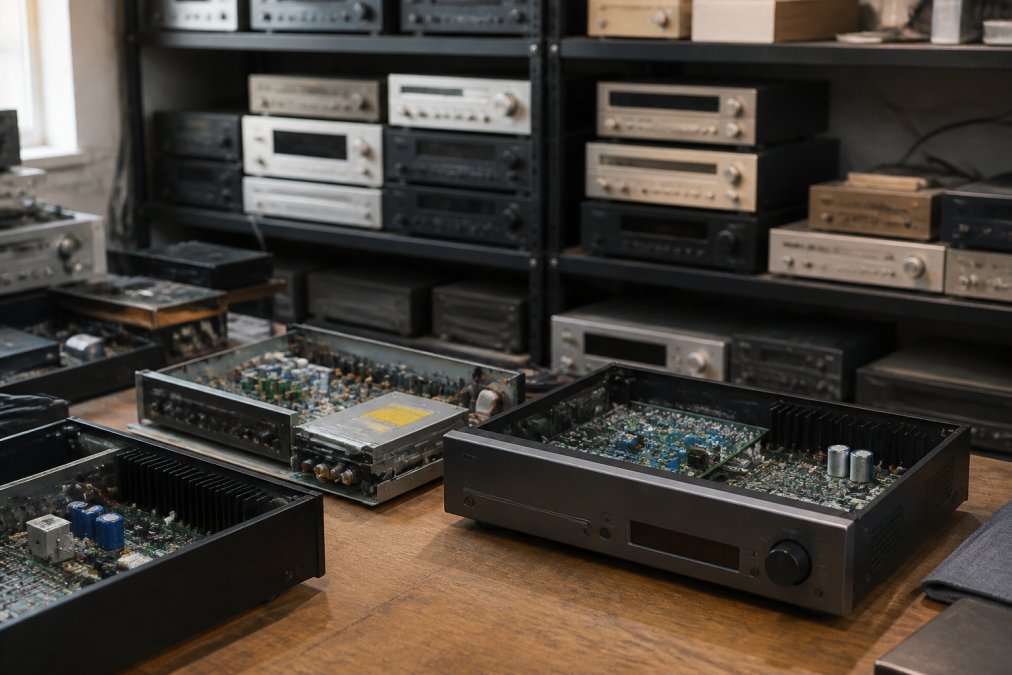
Choosing components for longevity starts at the specification stage, before a single purchase is made. Prioritize DAC chips, amplifier topologies, and power supply designs that have demonstrated multi-generational production runs. Discrete component designs, built from individual transistors, resistors, and capacitors rather than proprietary application-specific integrated circuits, are significantly easier to repair and source over time because the parts are commodity items.
A practical checklist for long-lifecycle component selection:
- Prefer manufacturers who publish component datasheets and service documentation
- Favor designs built around widely available DAC chips with long production histories
- Avoid proprietary connectors and interfaces that create vendor lock-in
- Check whether the manufacturer offers a formal upgrade path for existing units
- Confirm that replacement capacitors and semiconductors are available from multiple distributors
The IPC standards for electronic component lifecycle management provide a useful framework for evaluating how component choices affect long-term repairability.
Step 2: Build in Supply Chain Visibility From Day One
Supply chain visibility means knowing, before you need a part, whether that part is still in production. Maintain a simple component database for your critical audio gear. Record the manufacturer, part number, and distributor for every major component in your system. Check that list annually against distributor inventory databases. When a part starts showing reduced availability or price spikes, that is your early warning signal.
Step 3: Maintain an Inventory Buffer for Critical Parts
An inventory buffer means holding a small, targeted stock of the components most likely to fail and most difficult to source. For audiophiles, this typically includes output tubes for tube amplifiers, specific capacitors in signal paths, and any proprietary modules that the manufacturer no longer stocks. The cost of a modest buffer is almost always lower than the cost of months without a functioning system while you hunt for a discontinued part.
Audio Equipment EOL Management: Tracking End-of-Life Risks
Audio equipment EOL management is the discipline of monitoring when manufacturers and component suppliers plan to discontinue support, production, or spare parts availability for specific products. Effective EOL management is the difference between a planned upgrade and an emergency replacement. build quality guide.
How to Read Obsolescence Notices and Last Time Buy Alerts
An obsolescence notice is a formal communication from a component manufacturer announcing that a specific part will be discontinued. A last time buy alert follows shortly after, giving distributors and OEMs a defined window, typically 90 to 180 days, to place final orders before production ends.
For audiophiles monitoring their own gear, relevant signals come from manufacturer service bulletins, distributor inventory alerts, community intelligence from audiophile forums, and firmware release notes. When a manufacturer stops issuing firmware updates, hardware support is usually not far behind. According to the U.S. Government Accountability Office's guidance on electronics lifecycle management, proactive monitoring of component status is consistently more cost-effective than reactive sourcing after discontinuation.
Reactive vs. Proactive Management: Why Timing Changes Everything
Reactive management means waiting until a component fails or becomes unavailable, then scrambling to find a replacement. Proactive management means tracking component status continuously and taking action, whether that is a last time buy, a redesign, or an upgrade, while options still exist. A proactive buyer who identifies an impending EOL can purchase a replacement component at standard pricing, schedule a planned service, and maintain system continuity. A reactive buyer faces inflated secondary market prices, long lead times, and the real possibility that the part simply cannot be found.
Modular Audio Component Design and Upgradability
Modular audio component design is the approach of building audio systems from discrete, independently replaceable functional blocks, so that a single subsystem can be upgraded or repaired without replacing the entire unit.
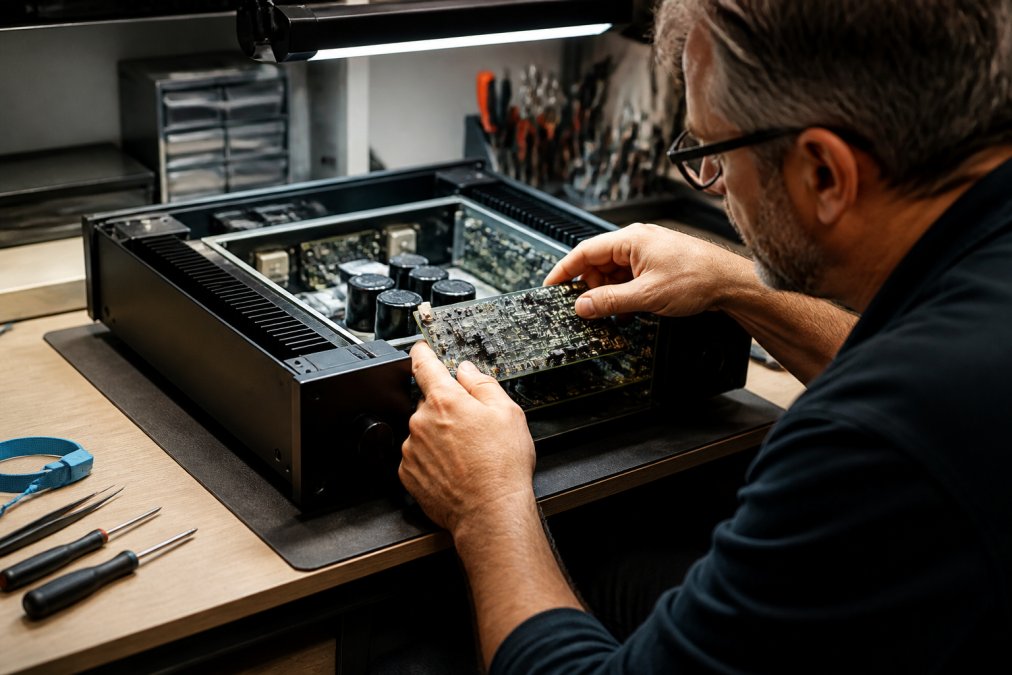
A monolithic design, where all functions are integrated onto a single PCB with no upgrade path, is a liability the moment any one subsystem becomes obsolete. A modular architecture allows the owner to swap the DAC stage, upgrade the clock, or replace the output section independently. Wyred 4 Sound has built this principle into its product line explicitly. The DAC-2v2 Upgrade ($1,099) and DAC-1v2 Upgrade ($799) allow owners of original DAC-2 and DAC-1 units to send their existing hardware in for a factory-direct upgrade to current-generation DAC chips, including the flagship 9038PRO chip in the DAC-2v2se. The Femto Grade Clock Upgrade ($125) allows DAC-1 and DAC-2 owners to upgrade the internal clock to femto-grade precision, lowering phase jitter significantly without replacing the entire unit. This upgrade path model is the most direct answer to audio component obsolescence at the system level. Instead of discarding a functioning amplifier or DAC because one subsystem has aged, modular design lets you address the specific component that needs attention.


Software-Defined Audio and Firmware Support as a Longevity Strategy
Hardware obsolescence gets most of the attention. Software obsolescence is just as dangerous, and it moves faster. Software-defined audio refers to audio processing functions, filtering, upsampling, noise shaping, digital volume control, that are implemented in firmware or DSP code rather than fixed analog hardware. The advantage is flexibility; the risk is dependency: if firmware support ends, the hardware may lose functionality or compatibility with current sources.
Before purchasing any software-defined audio component, ask: How long has the manufacturer historically supported firmware for previous product generations? Are firmware updates delivered over USB, network, or only through factory service? Does the hardware remain functional if firmware updates stop, or does it depend on cloud authentication? Legacy hardware that depends on cloud-based licensing or authentication is particularly vulnerable. When the authentication server goes offline, the hardware becomes non-functional regardless of its physical condition. The Right to Repair Coalition's framework for firmware transparency advocates for manufacturer disclosure of firmware support timelines, a standard that benefits audiophiles directly when evaluating long-term software commitments.
Redesign vs. Stockpiling: A Cost-Benefit Analysis for Audiophiles
When a critical component approaches end-of-life, you face a genuine decision: stockpile the original part, or redesign around a current alternative.
| Scenario | Stockpiling Makes Sense | Redesign Makes Sense |
|---|---|---|
| Component cost | Low unit cost, easy to store | High unit cost, storage impractical |
| Failure rate | Predictable, low failure rate | High wear component likely to fail repeatedly |
| Alternatives available | No suitable drop-in replacement | Modern equivalent performs equally or better |
| Manufacturer upgrade path | No factory upgrade offered | Factory upgrade path exists |
| System age | System is near end of service life | System has 10+ years of planned use remaining |
For most audiophiles, the calculus favors redesign when a manufacturer offers a formal upgrade path. Stockpiling is the right call for small, inexpensive consumables, output tubes, fuses, specific capacitors, where the alternative is a full board redesign. The STP-SE Upgrades ($950) from Wyred 4 Sound illustrate this cost-benefit balance well. Rather than stockpiling obsolete preamp components, the Stage 1 and Stage 2 upgrade paths bring existing STP-SE units to current performance standards through factory-direct modification.
Sustainable Repairability, Right-to-Repair, and Open-Source Alternatives
The right-to-repair movement has gained significant legislative traction. The FTC's report on repair restrictions and their impact on consumers documented the ways in which manufacturer restrictions on repair impose real costs on consumers and reduce product lifespans.
For audiophiles, sustainable repairability means choosing manufacturers who publish service documentation, favoring designs that use standard non-proprietary hardware, and exploring open-source hardware alternatives for specific subsystems. A product that cannot be repaired is a product that will be discarded. Choosing repairable, well-documented audio hardware is both an environmental choice and a practical one. Open-source hardware alternatives are particularly relevant for digital interface and streaming subsystems, where the pace of format change is highest and the risk of firmware abandonment is greatest.
How to Prevent Audio Component Obsolescence: A Step-by-Step Summary
Audio component obsolescence is preventable with consistent, proactive attention across four stages: selection, monitoring, maintenance, and upgrade planning.
| Stage | Action | Frequency |
|---|---|---|
| Selection | Choose long-lifecycle, modular, well-documented components | At purchase |
| Monitoring | Check component status and distributor inventory | Annually |
| EOL response | Act on obsolescence notices within 60 days | As needed |
| Upgrade planning | Evaluate manufacturer upgrade paths before components fail | Every 3-5 years |
Step-by-step process:
- Audit your current system. List every major component, its manufacturer, and whether a formal service or upgrade path exists.
- Build a component database. Record key part numbers for critical subsystems, DAC chips, clock oscillators, output devices.
- Set annual review reminders. Check distributor inventory and manufacturer support pages once per year.
- Subscribe to manufacturer communications. EOL notices and last time buy alerts go to registered owners first.
- Evaluate upgrade paths before failures occur. Factory upgrade programs are only available while the manufacturer supports the original platform.
- Prioritize modular and repairable designs for future purchases. Modular audio component design is the single most effective structural defense against obsolescence.
- Maintain a small buffer stock for consumables. Output tubes, fuses, and specific capacitors are worth holding in small quantities.
- Demand firmware transparency. Before purchasing any software-defined audio component, confirm the manufacturer's support commitment in writing.
The audiophiles who protect their investments longest are those who treat lifecycle management as a routine part of system ownership, not an emergency response.
Protecting a high-end audio investment over the long term requires the same discipline as building it in the first place. Wyred 4 Sound addresses this directly through factory-direct upgrade programs for DACs, preamps, and clocking systems, meaning your existing hardware can evolve rather than become obsolete. Explore the DAC-2v2 Upgrade, DAC-1v2 Upgrade, Femto Grade Clock Upgrade, and STP-SE Upgrades to extend the performance and relevance of your current system. Subscribe to Wyred 4 Sound updates to stay ahead of component lifecycle changes before they affect your listening.
Frequently Asked Questions
What is component obsolescence in high-end audio?
Audio component obsolescence occurs when a manufacturer discontinues a specific part, chip, or electronic component used in your equipment. This can be driven by planned obsolescence, shifting DAC chip production, or supply chain disruption. For audiophiles, it often means a beloved piece of legacy hardware can no longer be repaired or upgraded using original parts, forcing a choice between sourcing alternatives, stockpiling inventory, or redesigning the signal chain entirely.
How does modular design help prevent audio component obsolescence?
Modular audio component design separates a device into replaceable, independently upgradeable sections. When one module reaches end-of-life, only that section needs to be swapped rather than the entire unit. This approach reduces technical debt, extends the product roadmap for the whole system, and gives manufacturers a practical path to swap in newer DAC chips or clock circuits without a full redesign. It is one of the most effective long-term mitigation strategies available to both engineers and end users.
Can firmware updates extend the life of audio hardware?
Yes. Firmware updates are one of the most cost-effective tools for extending hardware longevity. Software-defined audio features, such as digital filter options, input handling, and streaming protocol support, can be added or updated without touching the physical PCB design. A DAC or music server that receives regular firmware support effectively gains new capabilities over time, delaying the point at which the hardware becomes obsolete. Always verify a manufacturer's firmware support history before purchasing.
What is the typical lifespan of high-end audio components?
Well-built high-end audio components using quality electronic components and conservative thermal design can remain in active service for 15 to 25 years or more. The limiting factors are usually capacitor degradation, discontinued DAC chips, and loss of firmware support rather than mechanical failure. Choosing manufacturers who offer factory upgrade paths, maintain a component database, and publish clear obsolescence notices significantly extends that practical lifespan beyond what mass-market gear can offer.

